
The world of performance marketing has reached an inflection point. While most brands are still trapped in the endless cycle of coordinating with human creators, waiting weeks for revisions, and burning thousands of dollars on content that misses the mark, a small group of sophisticated marketers has discovered a better way. They’re leveraging AI-generated user-generated content (UGC) to produce hundreds of high-converting ad variations in the time it used to take to get a single video approved.
The question isn’t whether AI will replace traditional UGC production—it’s whether you’ll adopt it before your competitors do. Arcads represents the vanguard of this transformation, offering e-commerce brands, SaaS companies, and performance agencies an unfair advantage in the race for customer attention and conversion.
The Creative Exhaustion Crisis: Why Traditional UGC is Broken
For performance marketers operating in 2026, the pressure to produce fresh, high-converting ad creative has never been more intense. Platform algorithms reward novelty. Audiences develop banner blindness faster than ever. Your competitors are launching new campaigns daily. Yet the traditional model for generating UGC ads remains fundamentally broken, creating what industry insiders call the “content bottleneck.”
Here’s the harsh reality: relying on human creators is slow, expensive, and maddeningly unpredictable. A single revision request can take days or even weeks to complete. By the time your carefully crafted ad finally gets approved and goes live, the trend you were trying to capitalize on has already peaked and declined. You’re left running yesterday’s creative in tomorrow’s marketplace—a guaranteed recipe for mediocre performance and wasted ad spend.
The operational overhead compounds the problem. Brands must ship physical products to multiple creators, hope the unboxing videos align with their vision, provide detailed revision notes, wait for refilming, and repeat the cycle until they get something usable. What used to cost $150 per video from a mid-tier creator—before factoring in product costs, shipping, and project management time—now represents an unsustainable barrier to the high-velocity testing modern performance marketing demands.
This friction isn’t merely an inconvenience. According to recent data from leading performance marketing benchmarks, brands that can test 10+ ad variations per week consistently outperform competitors by 40-60% in cost-per-acquisition efficiency. The math is brutal: every day spent waiting for creative is another day watching your ad budget evaporate with suboptimal performance.
The Psychology Behind Why UGC Outperforms Studio Ads
Before diving into the AI solution, it’s critical to understand why user-generated content converts so effectively—because these psychological principles are exactly what Arcads has been engineered to replicate at scale.
 Social Proof and Trust Signals: Human brains are wired to trust recommendations from “people like us” more than polished brand messaging. When viewers see what appears to be an authentic user sharing their genuine experience with a product, it activates mirror neurons and reduces psychological resistance. Traditional studio ads, with their perfect lighting and scripted delivery, trigger skepticism. UGC-style content, with its slight imperfections and conversational tone, signals authenticity and bypasses ad fatigue.
The Persuasion Architecture of Relatability: Polished ads create distance. They showcase aspirational lifestyles that viewers admire but don’t identify with. UGC does the opposite—it features real people in real environments, making the product feel accessible and achievable. This relatability factor is particularly powerful for direct-response campaigns where the goal is immediate action, not brand building. According to consumer behavior research from major social platforms, ads perceived as “authentic” generate 3-5x higher engagement rates than traditional creative.
Pattern Interruption in Saturated Feeds: Your target audience scrolls through hundreds of pieces of content daily. Studio ads follow predictable patterns that the brain learns to ignore. UGC’s inherent variability—different faces, different locations, different delivery styles—creates pattern interruption. Each new creator represents a fresh approach that can cut through the noise and recapture attention. This is why high-volume testing is so valuable: you’re not just testing messages, you’re testing different pattern interruptions to find what works for your specific audience segment.
The Reciprocity Principle: When someone shares their personal experience or recommendation, viewers unconsciously feel they’re receiving a gift of information. This triggers the reciprocity principle—a subtle psychological nudge toward giving something back, often in the form of a click, sign-up, or purchase. Studio ads, conversely, are transparently transactional and don’t activate this powerful persuasion mechanism.
Understanding these psychological drivers makes it clear why UGC has become the gold standard for performance marketing. The challenge has always been production velocity and cost—until now.
Introducing Arcads: The AI Creative Engine Built for Scale
Arcads isn’t just another AI tool bolted onto an outdated workflow. It represents a fundamental reimagining of how ad creative gets produced, tested, and deployed. At its core, Arcads transforms a simple text script into a fully realized, AI-generated UGC ad complete with realistic movement, natural emotion, and the authenticity markers that make UGC convert.
Introducing arcads ai hook generator
this hook generated over 100M views…
recreate it… or ANY HOOK using Arcads AI Latest update
Available TODAY for all users!
We created a library of the most viral hooks ready for you to steal:
comment “hook generator” to get it pic.twitter.com/HoN9FPnE9c
— arcads AI (@arcads_ai) November 17, 2025
The platform’s engine leverages advanced speech-to-speech technology, allowing the AI to perfectly mimic the tone, pace, and emotional inflection from a human voice recording. This means you can provide a voice sample with the exact energy and delivery style you want—whether that’s enthusiastic and high-energy or calm and reassuring—and the AI will replicate it with remarkable fidelity across unlimited variations.
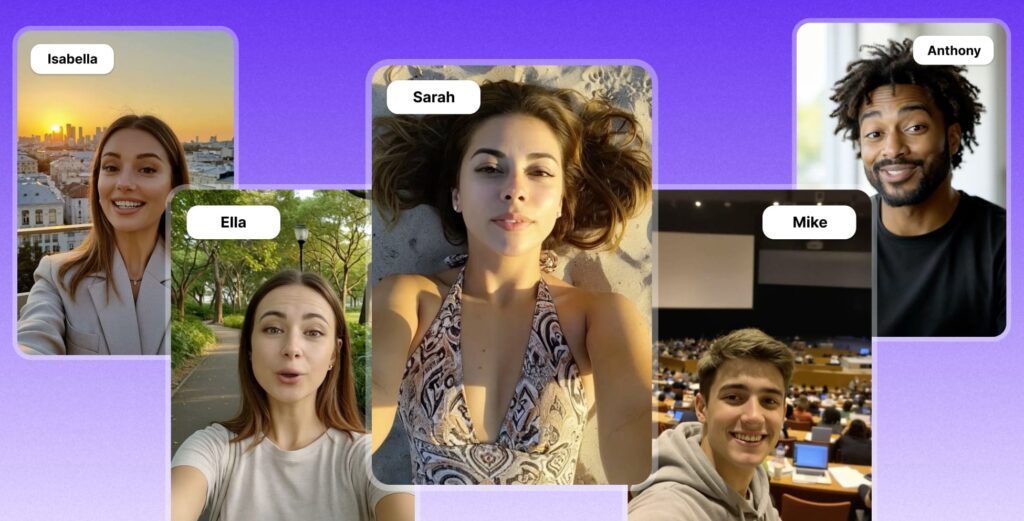
You gain instant access to a creative library of over 1,000 AI actors spanning different ages, genders, ethnicities, and visual styles. Need a millennial woman for a skincare ad? A Gen-Z creator for an energy drink promotion? A middle-aged professional for a B2B software demo? The diversity of the actor library ensures you can match your creative to your target demographic with precision. And if the perfect actor doesn’t exist in the library, Arcads allows you to generate custom actors from scratch, trained specifically to your brand’s aesthetic and audience profile.
The Arcads Advantage: Why This is Your Unfair Competitive Edge
The benefits of AI-generated UGC aren’t incremental improvements—they’re order-of-magnitude leaps that fundamentally alter campaign economics and competitive positioning. Here’s how Arcads delivers an unfair advantage in 2026:
Speed to Market That Redefines “Agile”
In modern performance marketing, speed is strategy. The brands winning market share are the ones who can test, learn, and launch faster than their competitors. What would it mean for your ROI if you could identify your winning ad creative in one afternoon instead of one month?
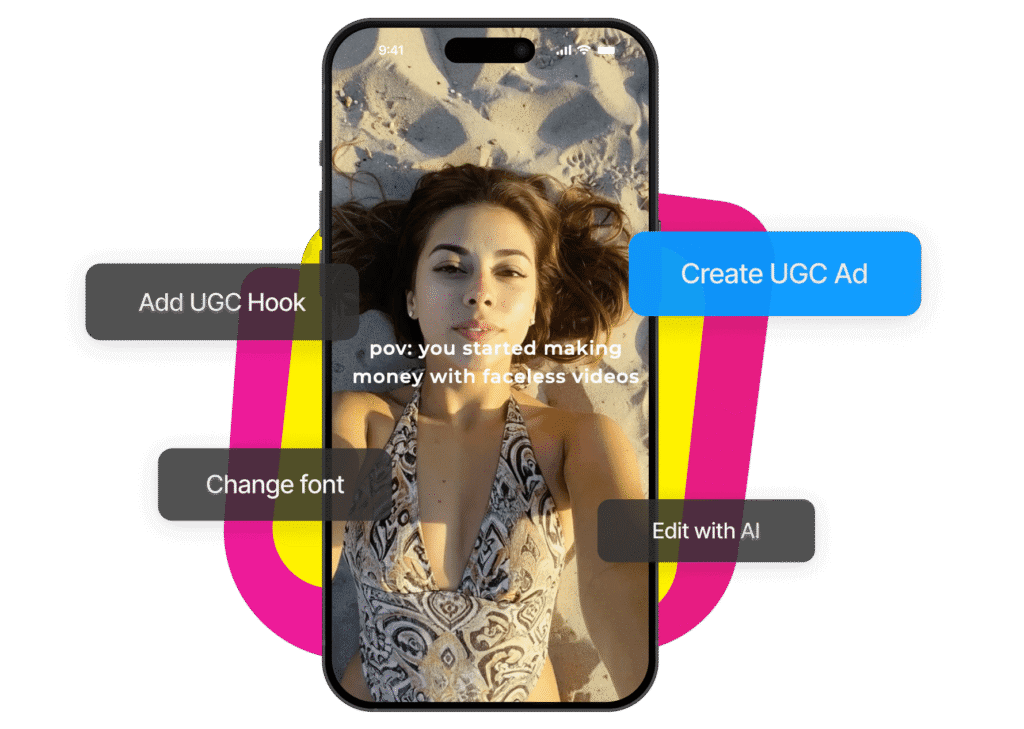 Arcads makes this possible. The platform enables you to create 10 fully unique ad variations in a single afternoon—or 100 different variations in under an hour when you’re running high-velocity campaigns. For sophisticated marketers, this speed unlocks entirely new strategic possibilities. You can test different hooks for the same product simultaneously, run regional variations with localized messaging, or create personalized creative for different audience segments—all within the same launch window.
This velocity advantage compounds over time. While competitors are stuck waiting for a creator to film revision number three, you’ve already identified your winning variation, allocated budget to it, and moved on to testing the next iteration. You’re operating inside a faster feedback loop, which means you’re learning faster, optimizing faster, and scaling faster.
Campaign Economics That Change Everything
Let’s talk numbers, because this is where Arcads becomes genuinely disruptive. Traditional UGC production costs approximately $150 per video when working with mid-tier creators. Premium creators command $300-500 per video. Factor in product costs, shipping, project management time, and revision cycles, and you’re looking at $200-300 all-in per usable asset.
Arcads obliterates this cost structure. The platform’s base plan delivers 10 unique video assets for $110 total—that’s $11 per video. You can test ten different hooks for the same cost as a single video from a human creator. This isn’t just a cost saving; it’s a strategic transformation that makes high-volume creative testing economically feasible for brands at any scale.
Think about the implications: A brand with a $5,000 monthly creative budget was previously limited to roughly 25-30 videos per month with human creators. That same budget with Arcads produces 450+ unique video variations. You’ve just increased your testing capacity by 15-18x without increasing spend. This volume enables true scientific testing methodology—isolating variables, testing assumptions, and letting data drive creative decisions rather than gut instinct.
Authenticity at Scale: Solving the “Uncanny Valley” Problem
The primary objection to AI-generated content has always been quality and authenticity. Early AI video tools produced robotic performances that screamed “fake” to discerning audiences, triggering the uncanny valley response and tanking conversion rates. Arcads was engineered specifically to solve this challenge through multiple layers of sophisticated technology.
Flawless Lip-Sync Technology: The platform ensures perfect synchronization between the audio script and the actor’s mouth movements. This isn’t approximate—it’s frame-accurate, creating the seamless delivery that builds trust with viewers.
Natural Human Gestures and Micro-Movements: Real humans don’t stand perfectly still when talking. We gesture, shift our weight, tilt our heads, and express emotion through subtle movements. Arcads’ AI generates these natural mannerisms automatically, including hand gestures that match the speech rhythm, small jitters, and head movements that mirror unconscious human behavior. These micro-details sell the authenticity of the performance.
Precise Emotional Control: The speech-to-speech feature provides macro-level control by copying the exact tonal delivery from your voice sample. This is refined through micro-level voice settings for stability and style exaggeration, giving you granular command over emotional delivery. Want calm and reassuring for a health product? Energetic and enthusiastic for a fitness offer? You control the emotional architecture of every video with precision that’s impossible when working with human creators who bring their own interpretation to scripts.
The result? AI-generated ads that are virtually indistinguishable from human-created UGC in blind A/B tests, but with the consistency, speed, and cost advantages that only AI can deliver.
Game-Changing Features Built for Performance Marketers
Beyond its core generation capabilities, Arcads includes a suite of specialized features designed for specific campaign workflows and creative challenges.
Realistic Product Integration Without Shipping Anything
For D2C brands, the biggest logistical hurdle in UGC production has always been product integration. You need creators to hold your product, wear it, unbox it, or demonstrate it—which means shipping physical items, hoping they arrive undamaged, and praying the creator follows your guidelines.
Arcads transforms this into a seamless digital workflow. You can generate a custom AI actor, upload an image of your product, and have that actor hold it, wear it, or interact with it—all without shipping a single physical item. The platform’s proprietary image engine (internally known as “Nano Banana”) has been optimized specifically for product accuracy and realistic lighting integration, producing results that are remarkably convincing.
While generating a new video-ready actor can take up to two hours for perfect calibration, this is a one-time investment that unlocks infinite variations. Once calibrated, you can place your product-holding actor into an “Unboxing POV” video, creating the natural-looking content that performs exceptionally well on TikTok, Instagram Reels, and Facebook feeds. You’ve eliminated the entire logistics chain while gaining the ability to iterate and test product presentations at unprecedented speed.
Crystal-Clear App Demos for SaaS and Tech Companies
For software companies and mobile apps, the “Show Your App” feature is revolutionary. It generates perfectly credible screen recordings where it appears an actor is genuinely showing your app live on their device, complete with natural screen reflections and realistic hand movements. This is the ultimate tool for producing engaging software promotions, feature announcements, and educational content at scale—without coordinating screen recording sessions with human creators or dealing with the technical headaches of proper lighting and capture.
Global Campaigns with Local Resonance
Effective international marketing requires deep localization, and Arcads supports this with comprehensive multi-language capabilities. The platform generates natural-sounding voiceovers in 30+ languages, allowing you to create localized versions of your top-performing creative for different markets without hiring native speakers or managing translation workflows.
You can also select specific accents—for example, choosing between American, British, or Australian English—ensuring your message resonates perfectly with regional audiences. This level of localization control, combined with the ability to swap actors to match regional demographics, enables truly global campaigns that feel locally authentic.
Real-World Use Cases: Who’s Winning with AI-Generated UGC
Direct-to-Consumer Brands: Imagine launching a new apparel line. By Monday afternoon, you have AI-generated UGC ads featuring ten different actors, all wearing your new branded hoodie in unboxing-style videos, ready for A/B testing across Meta and TikTok. This workflow—which would have required a month and a five-figure budget with human creators—happens in hours for a fraction of the cost. You test, identify winners, and scale before competitors even finish their first creator brief.
SaaS and Tech Startups: Software companies traditionally struggle with ad creative because screen recordings feel cold and impersonal. The “Show Your App” feature solves this by creating engaging, personality-driven demos that make complex software feel approachable and exciting. One mid-stage SaaS company reported a 73% improvement in demo request rates after switching from static screenshots to Arcads-generated app demonstrations.
Performance Marketing Agencies: Speed and scalability are the currencies of agency success. Arcads enables agencies to generate 100+ ad variations in under an hour, allowing them to test multiple hooks, scripts, and formats for clients simultaneously. This capability transforms the client relationship—you’re no longer a creative bottleneck but a strategic advantage, delivering better results faster than competitors still trapped in manual workflows.
How to Get Started with Arcads: Your Implementation Roadmap
Ready to eliminate your creative bottleneck and start winning with AI-generated UGC? Here’s how sophisticated marketers are implementing Arcads for maximum impact:
Step 1: Audit Your Current Creative Performance. Before diving into AI generation, analyze which existing UGC ads are performing best. Identify patterns in the hooks, visual styles, and emotional tones that resonate with your audience. This baseline data ensures your AI-generated creative builds on proven winners rather than starting from scratch.
Step 2: Develop Your Script Library. Create a library of 10-15 proven hooks and script variations. These become your templates for rapid testing. Include different value propositions, pain points, and calls-to-action so you can quickly generate variations optimized for different audience segments.
Step 3: Select and Calibrate Your Actors. Browse Arcads’ 1,000+ actor library to identify performers who match your target demographic. If you need custom actors for brand consistency, invest time upfront in the calibration process. Remember: this is a one-time investment that unlocks unlimited variations.
Step 4: Generate Your First Batch and Test. Start with a controlled test—generate 10 variations of your top-performing script with different actors and slight delivery variations. Launch these across your advertising platforms and let data identify the winners. Most brands see clear performance differentiation within 48-72 hours.
Step 5: Scale Winners and Iterate. Once you’ve identified top performers, generate additional variations on those themes. Test different hooks with the winning actor, or keep the winning script but test additional actors. Build a continuous optimization cycle powered by data, not guesswork.
The Verdict: In 2026, You Either Automate or Evaporate
The competitive landscape of performance marketing is undergoing a fundamental transformation. The brands that will dominate in 2026 and beyond aren’t necessarily those with the biggest budgets—they’re the ones with the fastest feedback loops, the most sophisticated testing methodologies, and the operational agility to capitalize on insights before competitors even recognize the opportunity.
Continuing with manual UGC workflows isn’t just inefficient—it’s a strategic liability. While you’re waiting for revision number three from a creator who’s juggling five other brand partnerships, your competitors are deploying their hundredth creative variation and scaling the winners. You’re bringing a knife to a gunfight, and the market doesn’t reward noble suffering.
The mathematics are undeniable: $11 per video versus $150+ per video. Hours versus weeks. Unlimited variations versus constrained testing. The question isn’t whether AI-generated UGC will become the standard—it’s whether you’ll adopt it early enough to gain a competitive advantage or late enough that you’re playing catch-up.
According to recent analysis from leading ad platforms, early adopters of AI creative tools are seeing 50-70% reductions in cost-per-acquisition while simultaneously increasing testing velocity by 10-15x. These aren’t marginal improvements—they’re the kind of efficiency gains that reshape market dynamics and create winner-take-most outcomes.
Your Call to Action: Stop Burning Budget, Start Winning
The era of creative bottlenecks, missed deadlines, and burned ad budgets is over—but only for marketers who are willing to embrace the new paradigm. If you’re still overpaying for content that underdelivers while competitors outmaneuver you with superior creative velocity, you’re making a choice. That choice has consequences.
Click here to start your Arcads journey and generate your first hyper-realistic UGC ad in minutes. See for yourself why sophisticated marketers are abandoning traditional UGC production and building unassailable advantages with AI-powered creative at scale.
The future of ad creative isn’t coming—it’s already here. The only question is whether you’ll lead the transformation or watch from the sidelines as competitors who moved faster capture the market share that could have been yours.
Frequently Asked Questions About AI-Generated UGC
1. Will viewers be able to tell that my ads are AI-generated?
When properly executed, no. Arcads uses advanced lip-sync technology, natural gesture generation, and emotional control features to create ads that are virtually indistinguishable from human-created UGC in blind tests. The platform has been specifically engineered to avoid the “uncanny valley” effect by incorporating realistic micro-movements, natural speech patterns, and authentic emotional delivery. In performance data, AI-generated ads from quality platforms show equivalent or superior conversion rates compared to human UGC.
2. How does the cost of $11 per video compare to the quality I’d get from a $150 human creator?
The $11 price point enables volume testing that’s impossible at $150 per video. While individual human creators might bring unique personality quirks, the consistency and control you gain with AI often produces better aggregate performance. More importantly, at $11 per video, you can afford to test 10-15 variations to find the optimal performer—something economically unfeasible with human creators. The question isn’t whether one AI video equals one human video; it’s whether 15 AI variations outperform 1 human video. Data consistently shows the high-volume testing approach wins.
3. What types of products or services work best with AI-generated UGC?
AI-generated UGC performs exceptionally well for direct-to-consumer physical products (supplements, cosmetics, apparel, electronics), SaaS and mobile apps (using the “Show Your App” feature), and digital products or services. Any offer that benefits from authentic testimonial-style creative and requires high-volume testing is ideal. B2B services can also leverage AI UGC for educational content and thought leadership positioning. The main limitation is products requiring complex physical demonstrations that current AI can’t yet replicate perfectly—though this gap is closing rapidly.
4. How quickly can I generate and deploy new ads with Arcads?
Initial actor calibration can take up to 2 hours for custom actors, but this is a one-time investment. Once you have calibrated actors and script templates ready, you can generate 10 unique variations in an afternoon or 100+ variations in under an hour. Most marketers report going from concept to launched campaign in 24-48 hours with Arcads, compared to 2-4 weeks with traditional UGC production. This speed advantage compounds over time, creating a sustainable competitive moat.
5. Can I use AI-generated UGC across all advertising platforms, or are there restrictions?
AI-generated content is permitted on all major advertising platforms including Meta (Facebook/Instagram), TikTok, Google Ads, YouTube, and programmatic networks. Platform policies focus on content accuracy and compliance rather than production method. The key is ensuring your AI-generated ads don’t make misleading claims or violate platform-specific policies around regulated products. As long as your creative adheres to standard advertising guidelines, the fact that it’s AI-generated is irrelevant to platform approval. Many top-performing brands are already running AI-generated creative at scale across all channels without disclosure issues.