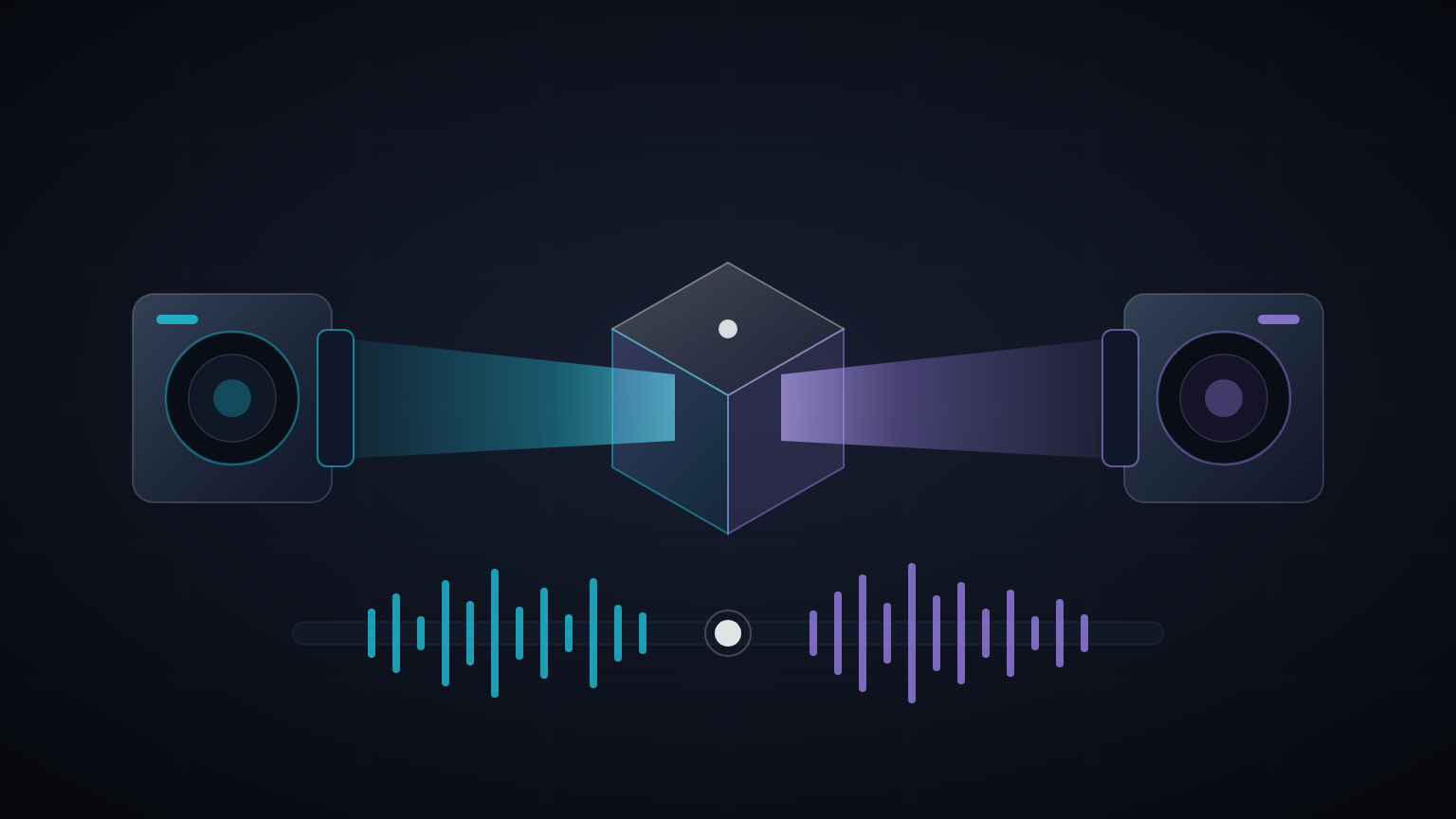
Teams shortlisting AI video engines late this year keep tripping over two outdated assumptions. Many creators still claim Kling 4.0 has zero programmatic API access while others assume Alibaba released Wan 3.0’s weights free under Apache 2.0 for local ComfyUI machines—and both assumptions cost production studios real money when choosing the wrong stack inside our AI Video Production Hub.
As of November 2026, both models operate primarily as metered commercial transformers, yet their architecture priorities diverge sharply. Kuaishou’s Kling 4.0 focuses on cinema-grade directing precision—offering 10-shot storyboard keyframes, 15-slot Omni visual references, and fal.ai pay-per-second endpoints—while Alibaba’s Wan 3.0 and Wan 3.0 Prime emphasize transparent Model Studio pricing, 30-second multi-cut continuity, native document-to-video parsing, and local prototyping via open-weight Wan 2.2.
In this article
- Where Kling 4.0 and Wan 3.0 Stand in November 2026
- Head-to-Head Matrix: Specs, API Access, and Per-Second Pricing
- Physics, Motion Continuity, and Identity Lock Under Stress
- Native Audio, Dialogue Clarity, and Lip-Sync Comparison
- Calling Both APIs Cleanly in Production Pipelines
- The Production Decision Tree: Cloud GPUs vs Open-Weight Fallback
- Rollout Checklist and Frequently Asked Questions
1.Where Kling 4.0 and Wan 3.0 Stand in November 2026
Understanding the API rules starts with endpoint access rather than cherry-picked highlight reels. Earlier this autumn, developers hoping to automate Kling workflows faced Kuaishou’s waitlist-only enterprise developer portal (kling.ai/dev/pricing) and had to click manually inside consumer web credits. That restriction shifted on November 5, 2026, when partner documentation on fal.ai opened public pay-per-second Kling 4.0 API endpoints (kling/v4/text-to-video, image-to-video, reference-to-video, and video-to-video/edit) alongside Kling O3 4K generation.
Meanwhile, Wan 3.0 (released commercially in August 2026 via wan.video and Alibaba Cloud Model Studio) runs strictly as a closed commercial service without downloadable weights. Open-source local rendering under Apache 2.0 still stops at the Wan 2.2 family (A14B MoE and TI2V-5B), which pairs cleanly with Model Studio because prompts perfected locally migrate straight onto wan3.0-video cloud calls.
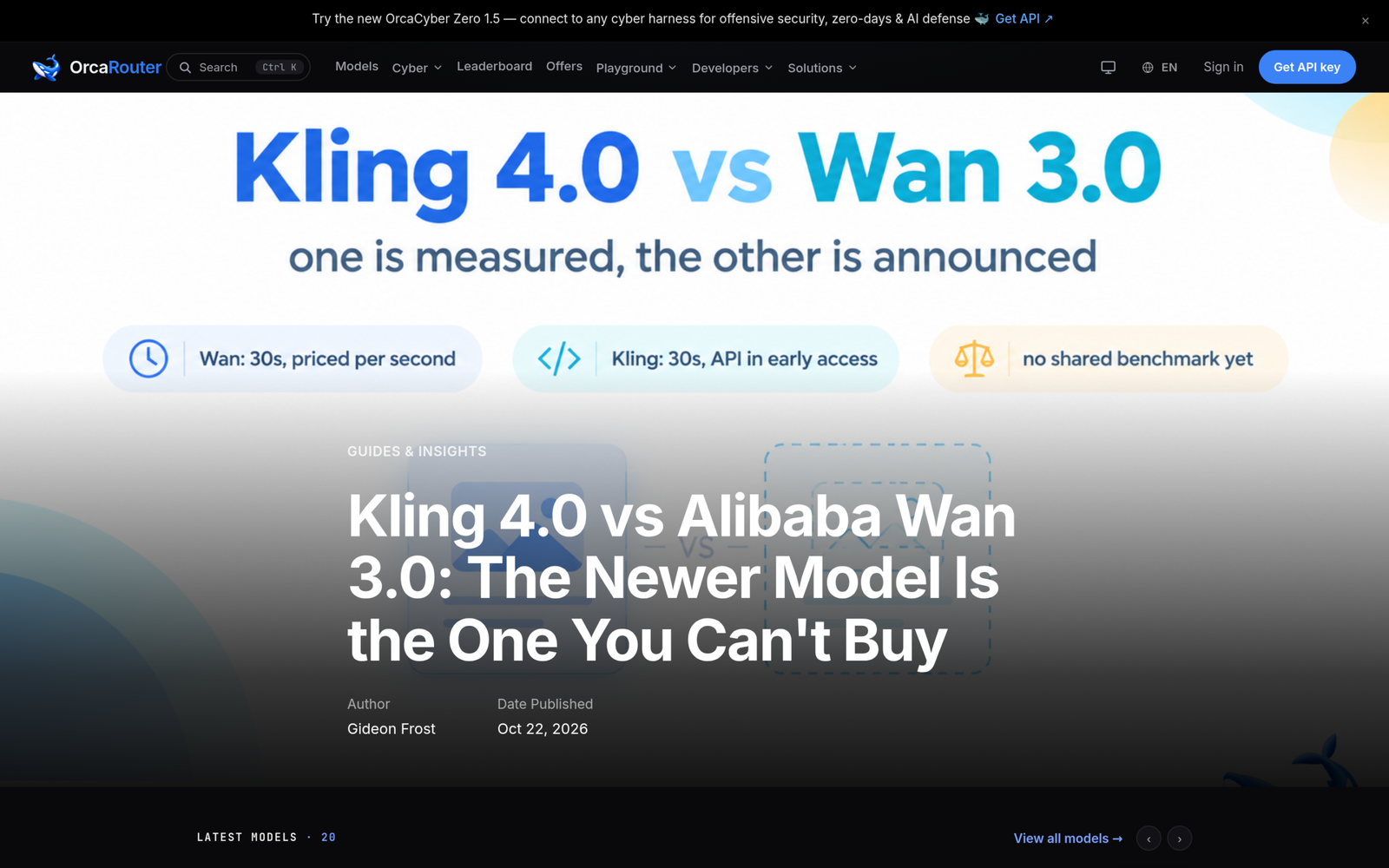
Public third-party arena data adds useful context while demanding healthy skepticism. On Artificial Analysis (AA-Video-T2V v2.0 with audio), Wan 3.0 scored 1,156 Elo, finishing ahead of ByteDance’s Seedance 2.5 (1,143) and MiniMax H3 (1,137)—extending the visual parity trends analyzed in our MiniMax Design H3 review. On OpenArt Arena, Wan 3.0 similarly placed #2 Overall and #1 in Editing (1,034 vs 1,033 runner-up). Yet as third-party benchmark summaries from November 1 explicitly caution, neither Kling 4.0 nor Wan 3.0 Prime held an active public LMArena score at press time, meaning teams should run identical five-second studio seed tests before signing annual retainers.
2.Head-to-Head Matrix: Specs, API Access, and Per-Second Pricing
Comparing monthly consumer subscriptions against cloud API tokens creates misleading budget spreadsheets. Kuaishou’s web studio charges flat monthly credit tiers ($25.99/mo annual Pro for 3,000 credits, $135/mo annual Premier for 18,000 credits, and $402/mo annual Ultra+ for 57,000 credits), whereas API automation charges strictly per second of video rendered—plus input duration on video-editing calls.
To normalize unit economics before building automated generators, compare documented provider specifications, per-second API pricing on fal.ai versus Alibaba Cloud Singapore Model Studio, and visual conditioning caps side by side below:
| Dimension | Kling 4.0 (Kuaishou / fal.ai API) | Wan 3.0 & Prime (Alibaba Model Studio) |
|---|---|---|
| Max Resolution & FPS | Native 1080p @ 48fps, upscaled 4K studio tiers (O3 4K $0.42/s) |
480p, 720p, 1080p up to 30fps continuous output |
| Max Clip Duration | 3–15s standard / 10-shot timeline keyframe directing |
2–30s continuous multi-shot timeline in a single payload |
| Reference Conditioning | Up to 15 Omni assets (3-view character sheets, depth maps, wireframes) |
Up to 20 indexed assets (<=10 images, <=5 videos, <=5 audio clips) |
| Direct & Partner API | Direct Kuaishou portal gated; live on fal.ai (kling/v4/...) |
Public Model Studio REST API (wan3.0-video, Singapore & China regions) |
| 1080p API Cost / Sec | $0.235/s (720p: $0.157/s; v2v edit billed (in+out), 2x out floor) |
$0.20/s Standard / $0.28/s Prime ($0.10–$0.14/s async Batch) |
| Native Audio Engine | Two-channel stereo foley & dialogue across 9 spoken languages |
Synchronized speech, ambient sound, plus external "Audio 1" track binding |
| Unique Differentiator | Granular video-to-video element swaps & storyboard keyframe lock | 100MB/50-page doc-to-video parsing + local Apache 2.0 Wan 2.2 fallback |
Look carefully at the fal.ai billing fine print before scripting batch edits with Kling 4.0. While standard text-to-video and image-to-video jobs meter strictly at $0.157/s (720p) or $0.235/s (1080p), calling Kling 4.0 video-input editing routes bills (input duration + output duration) at $0.094/s (720p) or $0.141/s (1080p) with a minimum floor equal to twice your generated output length. Meanwhile, Model Studio applies the same bilateral rule to Wan 3.0 reference videos (reference_videos duration plus generated output duration, capped at 30 seconds total), though standard text/image inputs stay purely output-metered—and drop 50% when submitted to Alibaba’s asynchronous batch queue.
For teams buying high-volume web seats rather than API tokens, verify effective per-second rates carefully: a deep breakdown of how Kuaishou’s workspace tiers convert credits into finished minutes appears inside our Kling 4.0 setup and pricing guide, while Alibaba’s regional token calculator sits in our Wan 3.0 API walkthrough.
3.Physics, Motion Continuity, and Identity Lock Under Stress
Static establishing shots rarely reveal why commercial directors lean toward one model over another. Real rejection happens when an actor turns 90 degrees toward a window, pours espresso into a spinning glass cup, or reaches across a foreground desk while holding a branded box. Evaluated across documented October and November practitioner benchmarks, the two engines solve temporal physics with noticeably different strengths.
Kling 4.0 separates itself cleanly during rapid camera choreography and tight multi-object interaction. By accepting three-view character turnaround sheets, skeletal wireframes, and grayscale depth-map videos across 15 Omni reference slots, Kling preserves jawline proportion, jewelry placement, and jacket folds far more reliably across fast orbital pans and whip-transitions than single-image generators. When revising an existing studio shoot—such as swapping a jacket color or cleaning up an unwanted boom mic shadow—its video-to-video/edit endpoint modifies targeted masks without melting surrounding foliage.
Wan 3.0 counters with structural narrative continuity across longer single-call takes. Because one API payload can direct [0s-5s], [5s-11s], and [11s-18s] camera cuts across 30 seconds using named "Image 1" and "Video 1" tokens, Wan removes hard inter-clip lighting shifts that appear when stitching six independent 5-second renders in an editor. In fluid splashes and fabric wind simulation, Wan 3.0 holds clean natural momentum without over-stylized slow-motion smoothing, though single-image inputs still require careful camera limits when circling behind unseen side geometry.
Treat both engines honestly on hands and dense crowd choreography. Neither transformer guarantees spotless five-finger close-ups on the first seed when fast martial arts or complex piano fingering occur; budget 2–3 exploratory seeds per hero closeup rather than assuming first-pass perfection.
4.Native Audio, Dialogue Clarity, and Lip-Sync Comparison
Shipping silent MP4 clips forces post-production teams to spend extra hours layering wind loops, room tone, and foley stems. Both flagship engines solve native sound natively, yet their acoustic tuning fits subtly different editorial workflows.
Kling 4.0 generates rich two-channel stereo beds calibrated specifically around physical scene impact and spoken dialogue across 9 languages (English, Mandarin, Japanese, Korean, Spanish, French, German, Portuguese, and Italian). Rain hitting car roofs spreads believably across stereo panning fields as the camera tracks past headlights, and multi-speaker lip timing locks tightly to close-up mouth shapes without forcing separate audio uploads.
Wan 3.0 shines brightest when narrative structure relies on external audio locks or Mandarin/English studio narration. Passing crisp ElevenLabs voice tracks via "Audio 1" reference URLs anchors facial cadence and ambient environmental reactions directly to your exact pre-mixed voiceover file—eliminating mismatched AI voice timbres across consecutive scenes in a 60-second explainer. In standalone text-to-audio passes, Wan’s soundstage sometimes reads slightly drier and closer to broadcast microphone placement than Kling’s theatrical wide stereo mix, which actually helps when vocal intelligibility over mobile phone speakers matters more than cinematic subwoofer rumble.
If your short-form Reels pipeline already runs a locked continuous ElevenLabs master narration track, disable speculative cloud dialogue generation during visual B-roll cuts and reserve native audio strictly for on-camera spokespersons or ambient texture plates.
5.Calling Both APIs Cleanly in Production Pipelines
Once a studio standardizes prompt phrasing, wrapping both endpoints behind one thin configuration router saves significant engineering maintenance. Notice how isolating shared duration bounds, 1080p switches, and prompt_extend controls prevents silent parameter drift across Kling and Wan calls.
Start by validating payload shapes on a fixed 5-second test shot before launching overnight cron loops. Notice how fal.ai exposes Kling 4.0 via queued REST webhooks while Alibaba Model Studio relies on bearer token synthesis with explicit prompt_extend: false overrides:
{
  "fal_kling_v4": {
    "endpoint": "https://queue.fal.run/fal-ai/kling-video/v4/image-to-video",
    "payload": {
      "prompt": "Barista slowly pours steamed milk into ceramic cup, warm window rim light, fixed camera",
      "image_url": "https://cdn.example.com/shots/barista_start.png",
      "duration": "5",
      "aspect_ratio": "9:16",
      "generate_audio": false
    }
  },
  "wan_3_0_model_studio": {
    "model": "wan3.0-video",
    "input": {
      "prompt": "[0s-5s] Close-up from Image 1 pouring steamed milk with soft morning steam, slow dolly in. [5s-10s] Wide reverse shot of customer smiling across counter.",
      "reference_images": ["https://cdn.example.com/shots/barista_start.png"]
    },
    "parameters": {
      "resolution": "1080P",
      "ratio": "9:16",
      "duration": 10,
      "prompt_extend": false,
      "audio": false
    }
  }
}
Protect engineering budgets with three mandatory guardrails inside your HTTP wrapper. First, cap retry loops strictly to two transient network errors (HTTP 429 or 5xx), because auto-retrying semantic generation timeouts silently doubles your per-clip spend before anyone notices a stalled webhook. Second, log every finished response’s exact billed seconds and resolution string directly alongside its shot ID so creative directors see live cost per keeper clip rather than surprises on a monthly cloud statement.
Third, align concurrency with delivery urgency. Synchronous 1080p endpoints ($0.20–$0.28/s) belong on interactive client reviews or rapid daytime edits, whereas overnight social calendars and multi-variant ad hooks run cleanly at half rate ($0.10/s) inside Alibaba Model Studio’s async Batch queue. Keeping prompt_extend: false inside production payloads guarantees repeated seeds never pick up unrequested warm sunsets when queued across both platforms.
6.The Production Decision Tree: Cloud GPUs vs Open-Weight Fallback
Choosing solely one winner overlooks how real agencies and solo creators blend engines across pre-production blocking, voiceover cuts, and final mastering. Instead of forcing every scene through one billing portal, route individual storyboard beats based on asset control, compliance boundaries, and shot duration. Notice how enterprise teams operating under strict NDAs or unreleased product photography also separate local-only prototyping from external cloud inference before uploading confidential assets.
Match your concrete shot bottleneck against the workflow decision table below before spinning up fresh RunPod GPUs or loading commercial API balances:
| Production Scenario | Winning Engine & Tier | Key Technical Reason |
|---|---|---|
Rapid blocking & camera tests ($0 API fee) |
Wan 2.2 (TI2V-5B / A14B on RunPod or local 24GB GPU) |
Apache 2.0 weights run uncapped locally; Motion + Camera wording transfers straight to Wan 3.0 |
| Continuous 15–30s multi-cut explainers | Wan 3.0 Standard ($0.10–$0.20/s via Model Studio) |
Native [0s-5s] timestamp switching preserves lighting and voiceover consistency in one job |
| Product-in-hand ads & strict character turns | Kling 4.0 ($0.157–$0.235/s on fal.ai or Kling Premier) |
15 Omni reference sheets + depth maps prevent warped logos during fast 90-degree moves |
| Targeted post-production element edits | Kling 4.0 Video-to-Video Edit ($0.141/s 1080p in+out) |
Replaces jackets, backgrounds, or props cleanly inside existing plates while holding grain |
| Automated PDF/slide pitch deck teasers | Wan 3.0 Doc-to-Video | Ingests 100MB/50-page decks natively without manual intermediate screenshot slicing |
Notice how cleanly hybrid pipelines compress total campaign spend. Blocking five candidate camera trajectories locally on Apache 2.0 Wan 2.2 (TI2V-5B on 8 GB cards or LightX2V 14B adapters on RunPod) burns fractions of a penny per minute until composition and hand pacing feel right. Once your director approves framing and seed motion, passing only the locked script and keyframe straight to Wan 3.0 Prime or Kling 4.0 fal.ai avoids wasting commercial tokens on rough exploratory passes—regularly cutting studio video spend by well over half without giving up final 1080p polish.
Meanwhile, reserve Kuaishou’s fixed monthly web subscriptions (Pro $25.99/mo or Premier $135/mo annual) exclusively for art directors who iterate interactively inside browser timelines rather than CI pipelines. Once scripts trigger unattended overnight builds, metered fal.ai and Model Studio queues eliminate stranded subscription credits completely.
7.Rollout Checklist and Frequently Asked Questions
Before locking your team’s Q4 video stack, run one four-part calibration sprint across three representative storyboard shots: first test a 5-second 720p blocking seed on local Wan 2.2 (or $0.10/s Wan 3.0), second benchmark the exact same start frame and motion prompt against kling/v4/image-to-video at $0.157/s, third inspect hand stability and lip-sync plosives with studio headphones at native resolution, and fourth verify whether async overnight Wan Batch saves 50% on recurring social calendars.
7.1Is Kling 4.0 officially available via public API in November 2026?
Yes, via verified partner infrastructure. While Kuaishou’s own direct developer API billing tier (kling.ai/dev/pricing) remains gated behind early-access enterprise approval, third-party developers can call fal-ai/kling-video/v4/... immediately on fal.ai at $0.157/s (720p) and $0.235/s (1080p).
7.2Can you download and run Wan 3.0 or Kling 4.0 weights locally on ComfyUI?
No. Neither Kling 4.0 nor Wan 3.0 offers downloadable open-source checkpoints. For zero-fee local ComfyUI rendering and paired custom LoRA workflows under Apache 2.0, Wan’s open release line currently peaks at Wan 2.2 (T2V-A14B, I2V-A14B, TI2V-5B, and Animate-2-14B).
7.3Which model is cheaper for automated 1080p short-form video pipelines?
Wan 3.0 holds the lowest public 1080p API rate at $0.20/s Standard ($0.10/s via asynchronous Batch queues) versus $0.235/s for Kling 4.0 on fal.ai and $0.28/s for Wan 3.0 Prime. High-volume consumer users may still beat pay-per-second API rates on annual Kling Premier subscriptions if manual UI workflows fit their team.
7.4Do Kling 4.0 and Wan 3.0 generate native 4K video out of the box?
Kling 4.0 focuses natively on 1080p @ 48fps with studio 4K tiers (Kling O3 priced around $0.42/s on partner endpoints), whereas Wan 3.0 tops out natively at 1080p @ 30fps. Teams delivering true 3840x2160 broadcast deliverables generally render clean 1080p plates from either engine and run deterministic spatial upscaling in post.
7.5Which engine handles commercial brand guidelines and multi-shot stories better?
Split the choice cleanly by shot structure. Pick Kling 4.0 when preserving exact hero product proportions, repeating logos, or fast multi-angle character sheets via 15 Omni references, and pick Wan 3.0 when generating continuous 15–30-second multi-cut explainers, document summaries, or voiceover-locked Reels.

3 Comments